

What happens when a man who exploits beauty meets someone who sees it as sacred?
A grieving young man is seduced by a world that turns beauty into profit, until a tempestuous English poet challenges everything he believes about what beauty is—and what it’s for.
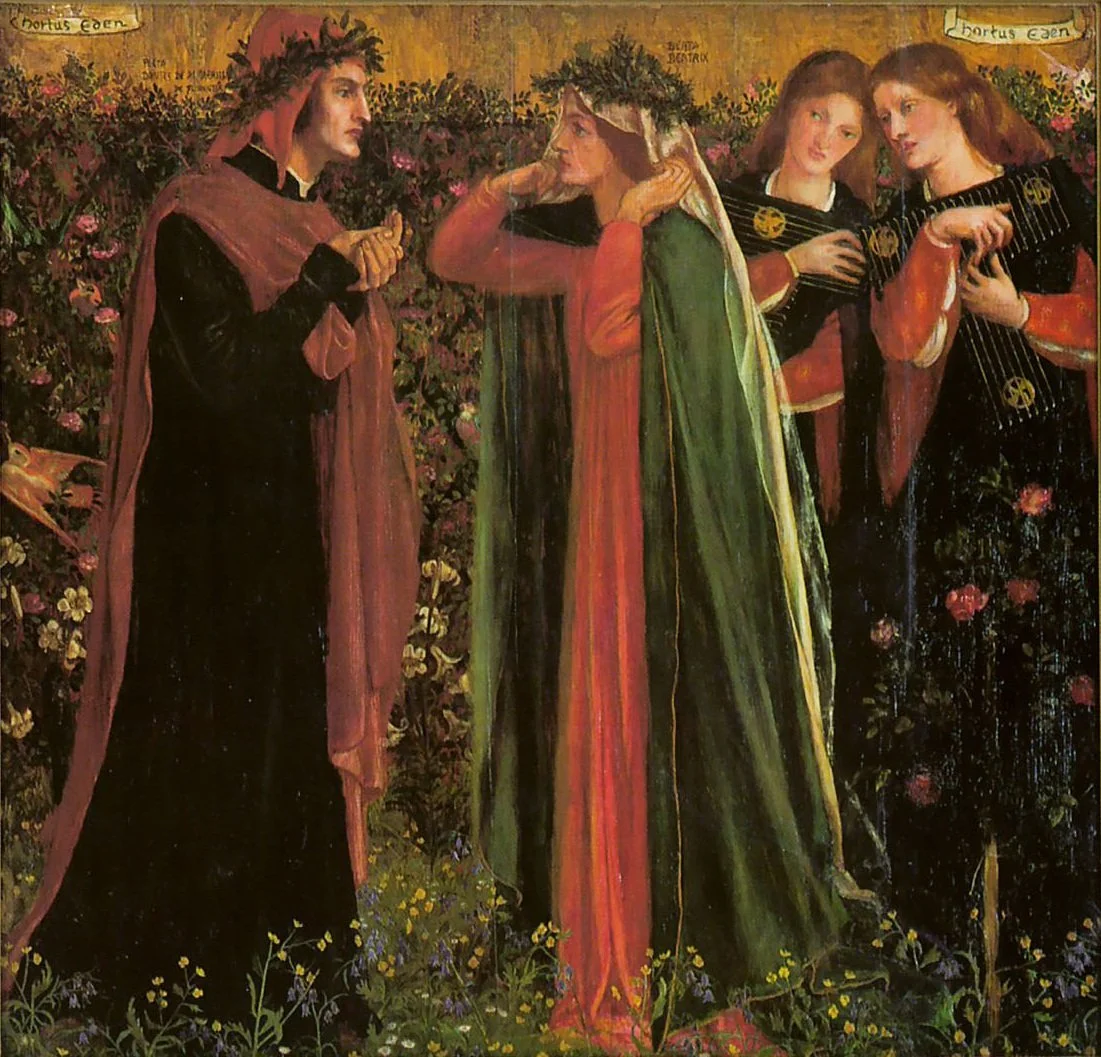
Soul of the Film
An encounter with beauty awakens something in the human soul.
The beautiful things we find and inevitably lose awaken in us a longing for a beauty that never fades.
This longing leads us to grasp, to hold on, to try to possess the things we find most beautiful.
But beauty cannot be possessed.
This story follows a wounded young man who chases the beautiful things of the world, only to discover that what he truly desires can only be found in letting them go.
Why I Wrote This Film
At a Glance
Character-driven drama
Reflective, poetic in tone
Set in Los Angeles
Feature screenplay
123 pages
A theme-driven narrative
Echoing Dante’s descent before ascent
Rooted in a Catholic worldview
In the spirit of The Tree of Life
A story about desire, purified into love
For a generation searching for meaning in a world that has reduced beauty to consumption and life to distraction.
Short Synopsis
After the death of his mother, Matthew Castillo moves to Los Angeles to live with his cousin Drake, a charismatic entrepreneur whose fitness-apparel empire has turned his mansion into a dazzling hub of influencers, supermodels, and hungry young strivers.
Early in his time in LA, Matthew grows close to Lizzie, a social media star drawn to his sincerity in a world that treats her as an object. But as he sinks deeper into Drake’s world, his love begins to resemble the very gaze she fears—and she leaves him. Devastated, Matthew embraces Drake’s philosophy of relentless ambition, burying his grief in work, turning his artistic sensibilities into tools—beauty into profit. As the months pass, he becomes unrecognizable. He and Drake, indistinguishable.
Then he meets Alice, who holds a mirror to what he has become. Through her, he is introduced to her grandfather Edmund, a volatile yet tender English poet who sees the modern world’s treatment of beauty as a desecration. The moment Matthew steps into Edmund’s lamplit study, their worldviews collide. For the first time in years, Matthew begins to glimpse something he has long been yearning for.
As Matthew grows close to Edmund and Alice, he begins to question the life he has built, until a final confrontation with Drake shatters their friendship, forcing him to leave the world he once embraced. In the quiet months that follow, Matthew turns to writing in search of meaning, slowly discovering that the beauty he once tried to possess was never meant to be held onto, but to lead him toward something far beyond itself.
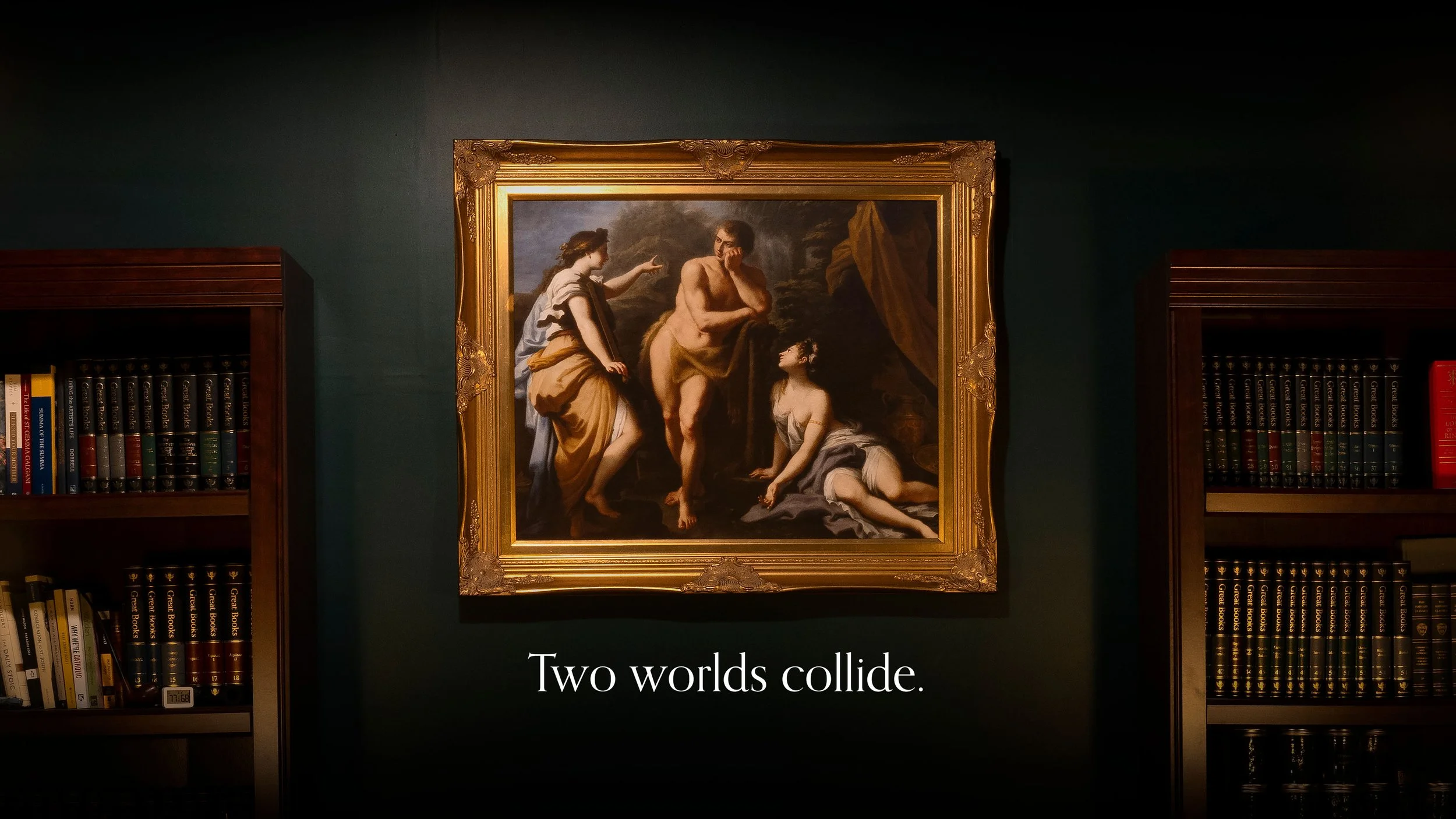
Full Synopsis
After the death of his mother, Matthew Castillo moves to Los Angeles to begin again. Or rather, that's what he tells himself. In reality, he's trying to outrun the memories of a lost happiness, losing himself instead in the seductive world of his cousin Drake.
Marketers, hustlers, influencers, supermodels – these are just some of the types thriving in Drake's world, a mansion-turned-headquarters of a fitness apparel empire. Hungry young strivers bustle through the house discussing ad campaigns, fixing lights, tilting the heads of America’s most beautiful people. In this world, beauty is cultivated and extracted, then turned into profit in the modern, algorithm-savvy way.
Matthew is relieved. He’s no longer thinking about the past. Then Lizzie, America’s most in-demand girl, arrives to discuss a business deal. Drake’s team quickly launches into the usual choreography of flattery, but it’s all interrupted when Matthew asks her a personal question. Lizzie falters. Her face softens.
That night, she pursues him, drawn to his sincerity. The two begin a relationship where Lizzie finally feels seen as a person. But as Matthew descends into Drake’s world, his innocence fades. And when Lizzie sees this, she leaves him. Devastated again, Matthew turns to Drake who offers his usual “chase success to forget about your mess” prescription. Matthew downs it.
He learns to leverage his natural eye for beauty, his attention to detail, his yearning for a perfection he can't quite put his finger on, but can point to. He can glimpse it. In images – eyes, smiles, laughs. Glances at the camera. He has a sense of it. He exploits it. Turning his artistic sensibilities into tools. Beauty into profit. And as the months pass, he transforms the company into something unrecognizable. He becomes unrecognizable. He and Drake, indistinguishable.
Then one day, a girl named Alice holds a mirror up to what he has become. Filled with remorse, he runs after her and reveals his true self in a moment of true vulnerability. She gives him another chance. Over the course of a summer, the two fall in love. Matthew begins to reclaim his former self. He begins talking about his mother again. Recognizing his sensitivity to beauty, Alice introduces him to her grandpa.
Edmund Ashford is a force of nature. He’s volatile, yet tender, and fiercely romantic. An old tempestuous British poet who will not tolerate the commodification of beauty, let alone its exploitation. Or, as he would put it, desecration. As soon as Matthew steps into his almost mythic tobacco smoke-filled study, he realizes that two opposing worlds are colliding.
And collide they do. So much that a gun is even drawn at one point. But the two also immediately recognize the beginnings of a beautiful friendship. Because they share a way of seeing that neither of them can articulate. But they recognize it in each other.
As the summer comes to a close, Matthew falls deeper in love with Alice as well as Edmund’s world. But Alice is leaving soon. She would stay if he asked, and they both know it. But he doesn’t ask. Something holds him back. So she goes.
Devastated, Matthew realizes that he couldn't commit to Alice because he was split between two worlds. One that taught him to consume beauty and one that was teaching him to behold it. On the brink of despair, he goes to Edmund who tells him the story of a young man named John Keats who transfigured his pain into something beautiful. The words land. For the first time, Matthew begins to channel his artistic sensibility into something honest. With Edmund’s help, he begins working on a novel that is ultimately the film we are watching. His narration, his prose. His writing, his processing of grief.
But it’s not ultimately his writing that helps him make sense of it. It’s not ultimately his writing that teaches him to behold. It’s the people at Edmund’s. Because Edmund’s house is an epicenter not just of beauty, but of community.
A community of young families who gather together daily. Matthew gets used to it. To the children running through the house, to Edmund reading them fairy tales, to weekends going by without anyone seeming to realize it. For the first time in his life, Matthew is surrounded by a happiness no one is trying to leverage, perform, or possess. It’s just shared.
Matthew realizes that the memories he was so desperately trying to outrun were never haunting him. They were beckoning him – toward something deeper. After finishing his novel, he goes fishing at the beach. For years, he had fished without catching anything. But on this day, he finally hooks something. He shouts with joy, exhilarated by the moment. But then, he turns and calls out behind him. Two young boys come running into the water. He gives the rod to them.
The Story in 7 Paintings
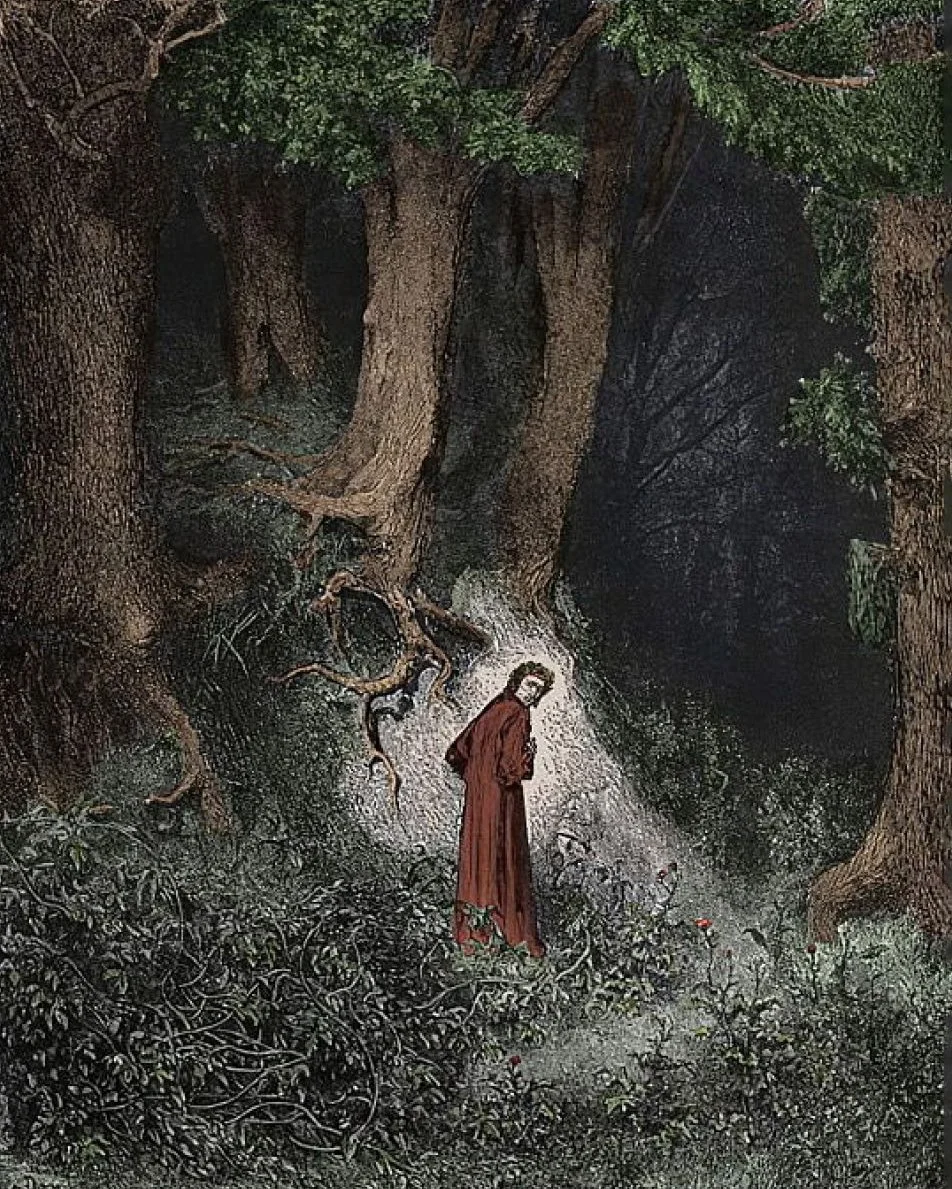
Lost in the Woods
Haunted by the very memories he’s escaping, Matthew navigates the savage woods of a Los Angeles neighborhood. Towering mansions overshadow him as he loses all sense of direction.
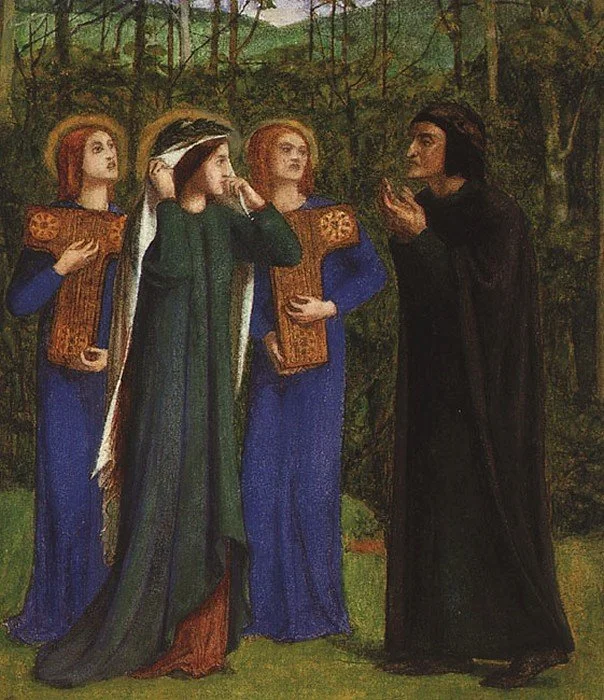
The Encounter
Matthew’s first encounter with Alice, where she interrupts his inward spiral, reorienting him toward his destination — a descending street.
Like Beatrice to Dante, Alice sets Matthew on his journey by pointing out the descent that must precede his ascent.
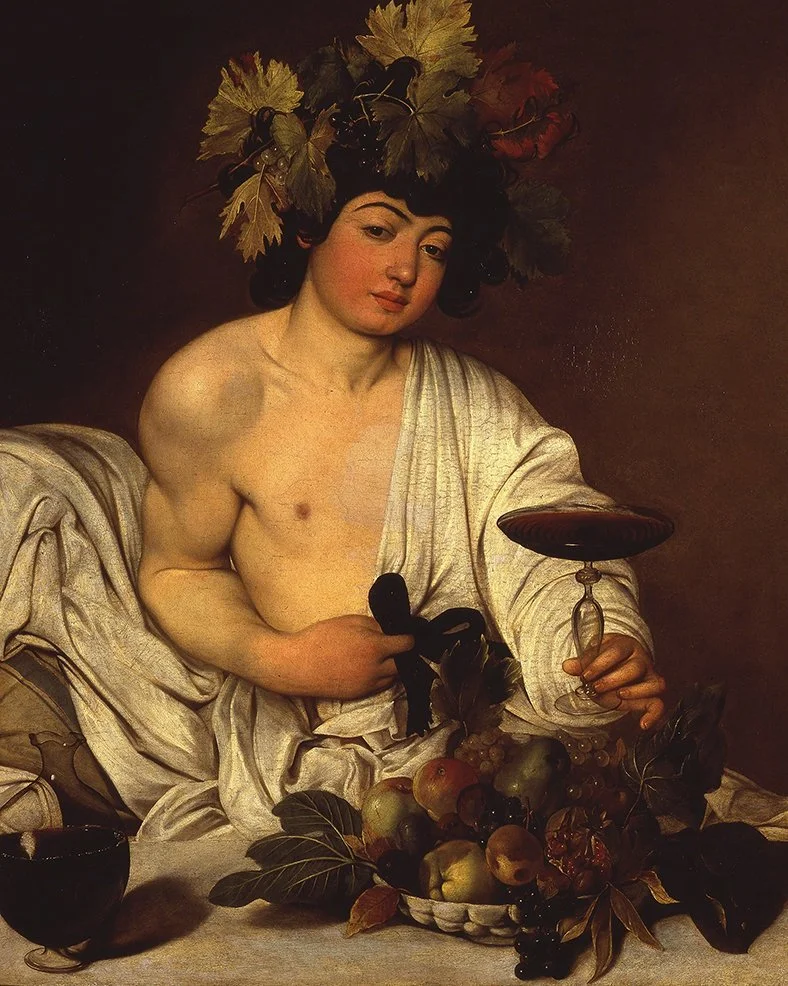
The Seduction
Matthew steps into a world that finally offers him a solution to his grief — the promise that the very beauty he had glimpsed before his loss doesn’t have to be just glimpsed anymore.
It can be crafted, cultivated, and devoured. Then it can be crafted, cultivated, and devoured again, perpetually – until the very concept of grief is altogether forgotten.
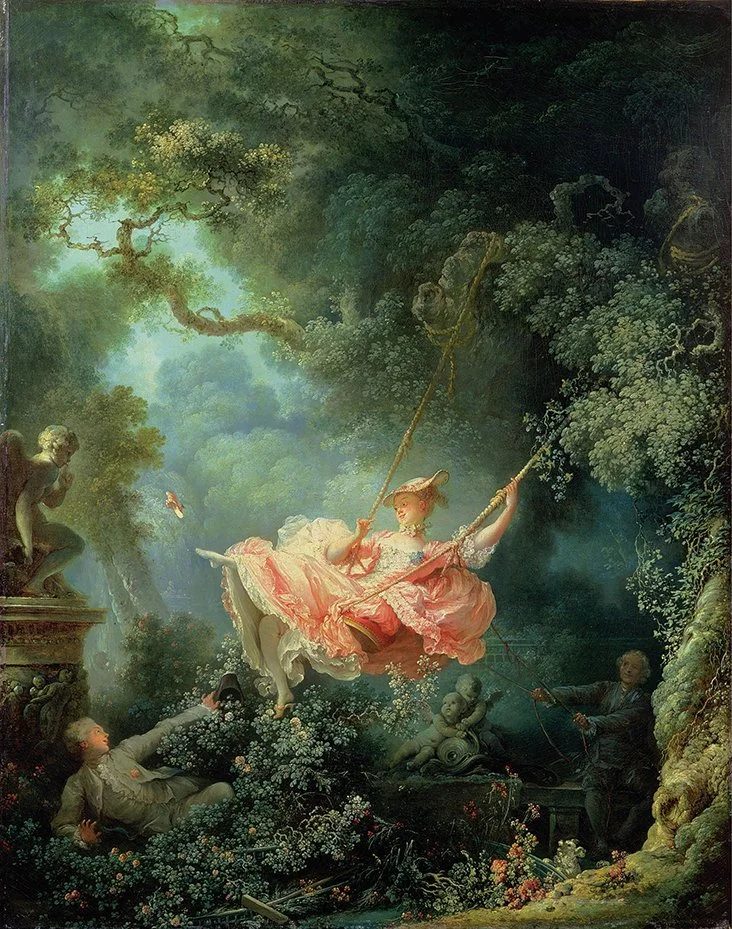
The Illusion
Matthew becomes entranced by this illusion. Over the course of a year, he’s transformed — into someone who finally has everything he wants. The most beautiful things, at his fingertips.
Never mind what stirs in the dark bushes of his conscience. He doesn’t see it. He is too engrossed by what’s in front of him.

The Shattering
The illusion breaks when Alice returns. She shuns him — not with words, but with a simple look in her eyes that reflect back his conscience. He begins to see it.
And when he meets her tempestuous grandfather, who confronts him much more directly, he begins to believe it.

The Choice
Now Matthew must decide – will he continue living the lie he has embraced, or reject it at the expense of everything he has come to cherish?
Paralyzed by his inaction, he loses Alice.
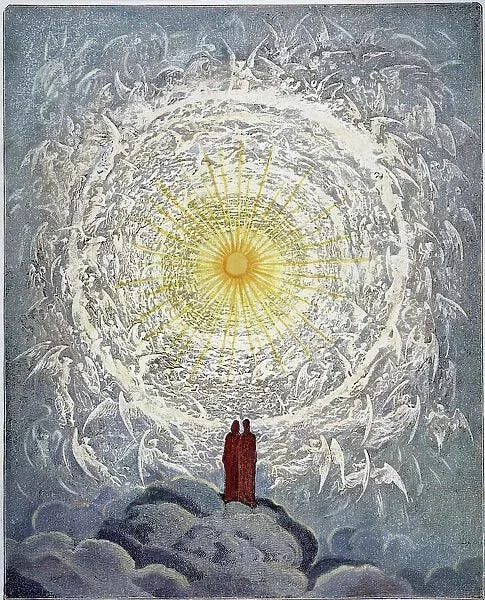
The Gift
Over the course of months, Matthew stumbles and falls amid self-deceptions and a devastating relapse.
But amidst the hardship, he begins to realize that it was only by surrendering his desires that he could finally receive the gift that he truly desired — the love that moves the sun and the other stars.
Works Referenced
Dark Wood, Doré
Beatrice Meeting Dante, Rossetti
Bacchus, Caravaggio
The Swing, Fragonard
Saint Jerome in His Study, Cleve
The Choice of Hercules, Shaftesbury
Paradiso, Doré