***picture here of a pipe with smoke coming out***
“A place for words, silence, and thought”
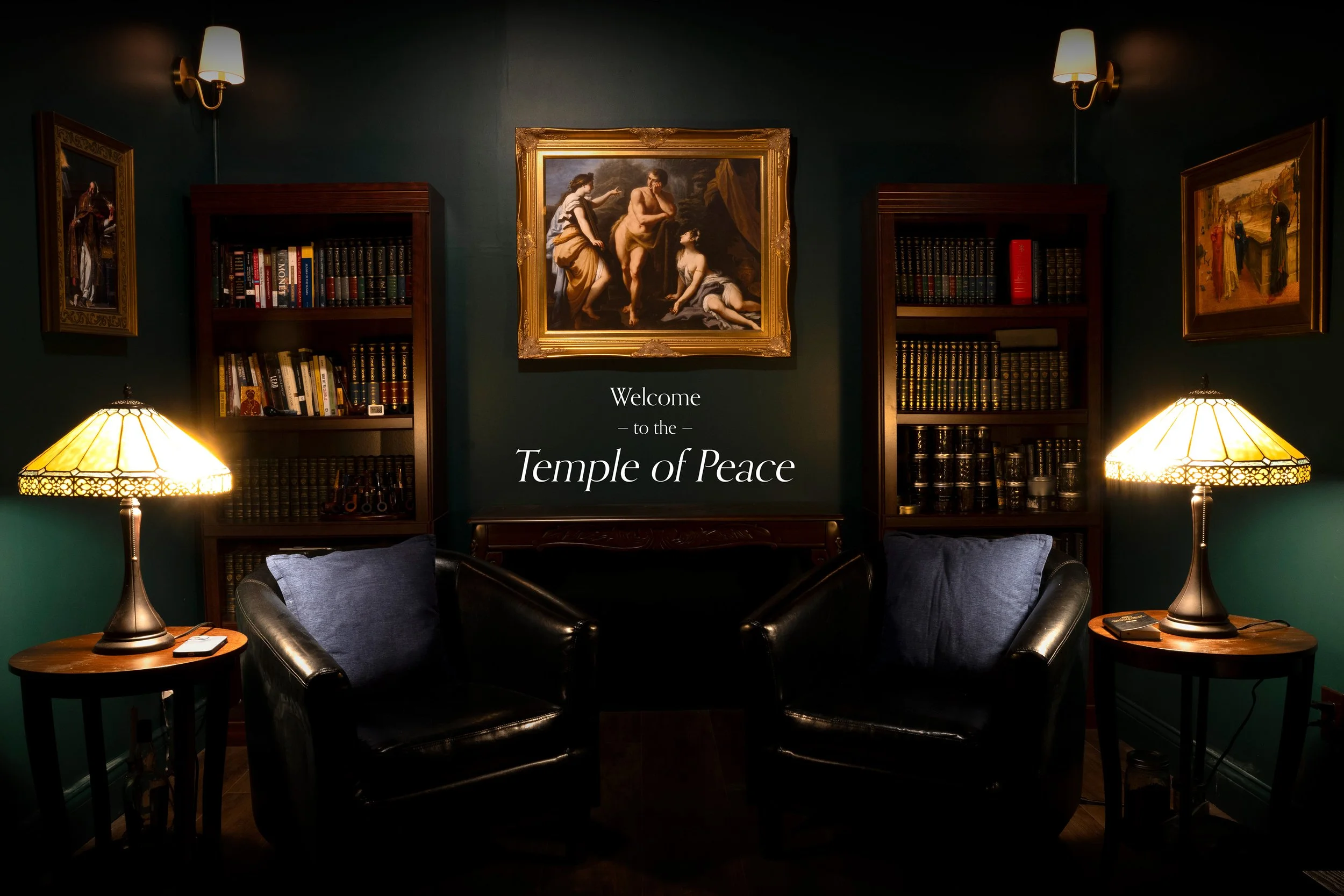
Malcolm’s study is a refuge from the noise of the modern world — a room of books, smoke, silence, music, and ritual.
But what happens when the modern world enters?
As Malcolm is preparing to read one of his poems to a young man, he realizes that the young man is immersed into his phone.
*** Picture of phone on desk***
***Picture of The Choice of Hercules here***
The Old World Meets the Algorithm
The scene is built around contrast: a young man from a fast, image-driven Los Angeles world enters the study of an old English poet who sees beauty as sacred. Malcolm does not merely disagree with Matthew’s world. He experiences it as a violation. The result is a charged, dialogue-driven encounter where comedy, danger, philosophy, and vulnerability constantly shift beneath the surface.
A Character of Extremes
Malcolm is disarming one moment and terrifying the next. He can be playful, absurd, generous, and deeply funny—then suddenly sharp, wounded, overwhelming, and morally ferocious. The role demands command of language, theatrical presence, comic timing, emotional volatility, and a final turn into genuine vulnerability. It is a performance-heavy role built around presence, rhythm, and rapid tonal shifts.
For all his absurdity and force, Malcolm is not merely a comic eccentric. Beneath the outbursts is a man who has spent his life giving himself to words, beauty, and contemplation—and who fears no one is left who can receive them. His anger breaks open into grief. His theatricality reveals a wound.
But also — Malcolm is so sensitive to anyone that abuses beauty because he himself made this mistake in his youth — and his wound from this shows up as the film progresses…
The temple becomes a battleground
A man who refuses to reduce love to desire.
The Central Tension: Beauty is Sacred
Malcolm believes beauty is not an object of consumption. It is not an image to possess, a pleasure to extract, or a desire to disguise as love. To him, beauty demands reverence. It asks something of the soul. That conviction makes him ridiculous, dangerous, tender, and, in his own strange way, right.
Beneath the Fury
The Abomination (picture of phone in study)
The turning point comes when Matthew, while Malcolm prepares to share something deeply personal, looks down at his phone. To anyone else, it is harmless. To Malcolm, it is an act of desecration. The scene suddenly becomes explosive: what began as eccentric hospitality turns into a confrontation over attention, poetry, beauty, and the disappearance of the listening soul.
Malcolm pulls out a gun which yes is ridiculous and humorous — but to Malcolm — this really is a matter of life and death — the fast paced consumption that the modern world has embraced stands in stark opposition to everything malcolm stands for. the books lining his study. malcolm is threatened by it — and the threat must be eliminated.
The Proof of Concept
This short film is a contained proof-of-concept scene drawn directly from the feature screenplay Juniper Valley. It is designed as a concentrated dramatic encounter: two men, one room, two opposing visions of beauty. The aim is to create a performance-driven short that captures the tone, world, and central conflict of the feature.
A Dramatic Opportunity
Malcolm is a rare kind of role: comic, volatile, literary, wounded, and commanding. He has extended monologues, sudden reversals, moments of absurd humor, flashes of danger, and a deeply human breaking point. The performance requires a British actor who can move quickly between charm, wit, menace, moral conviction, and vulnerability—without ever losing the grounded reality of the man beneath the theatre.